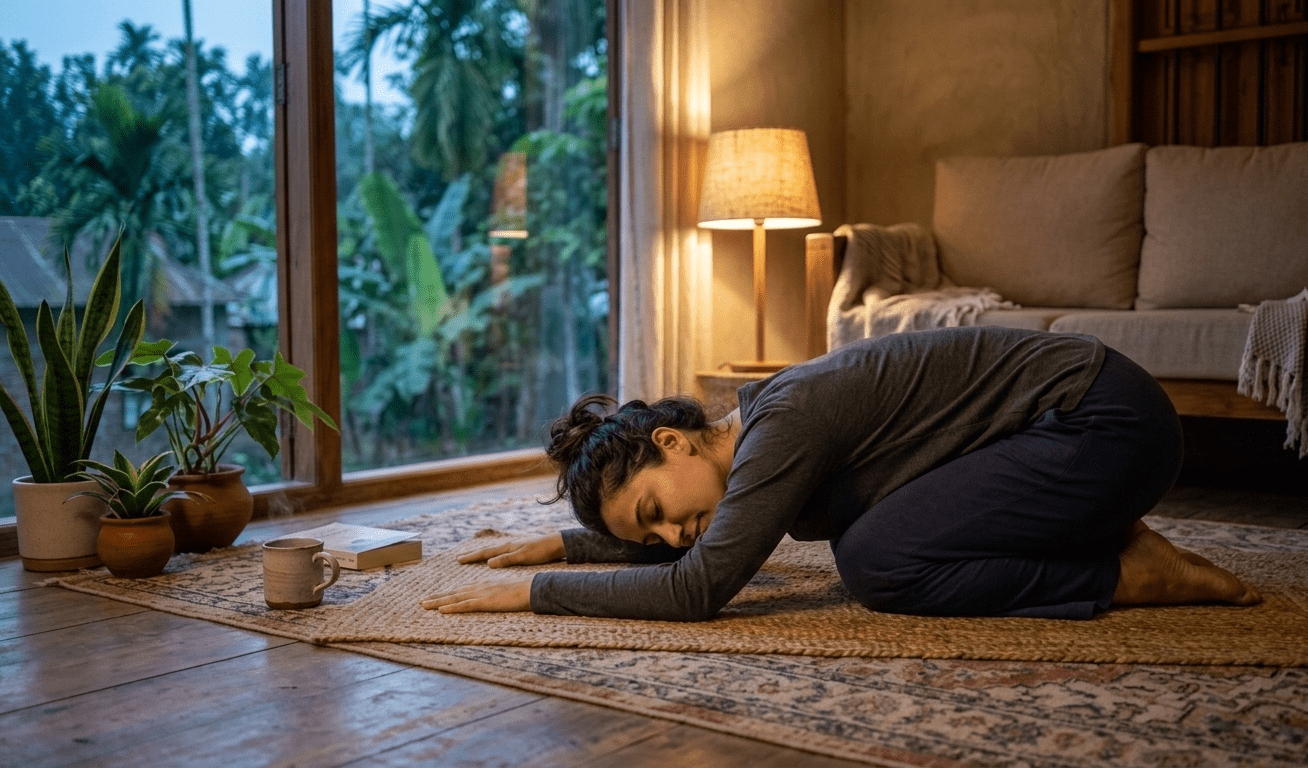
Stress and poor sleep are two of the most common complaints today. Tight shoulders, racing thoughts, restless nights – they feed into each other and drain energy. A beginner yoga routine can break that cycle by calming the nervous system, releasing physical tension, and preparing the body for deeper rest. This short, gentle sequence requires no experience, no mat (a carpet or rug works), and just 15-25 minutes before bed or during a stressful moment.
The routine combines easy poses (asanas), simple breathing (pranayama), and relaxation techniques. It focuses on activating the parasympathetic nervous system (rest-and-digest mode) to lower cortisol, slow heart rate, and quiet the mind. No advanced flexibility or strength needed – modifications are included for everyone.
Why Yoga Helps with Stress and Sleep
Yoga works on multiple levels:
- Physical: Gentle stretches release muscle tension built from sitting, hunching, or holding stress
- Mental: Focused breathing and mindful movement reduce overthinking and anxiety
- Nervous system: Poses and breathwork shift the body from fight-or-flight to rest mode
- Circadian support: Evening practice signals the body it’s time to wind down
Studies from Harvard Health, Mayo Clinic, and sleep research show that regular gentle yoga improves sleep quality, reduces insomnia symptoms, lowers perceived stress, and increases melatonin production. Even 10-20 minutes daily can make a noticeable difference within weeks.
Getting Started: Setup & Safety
You need a quiet space, comfortable clothes, and optional blanket or pillow for support. Do this routine in the evening (1-2 hours before bed) or anytime stress builds up.
- Move slowly – never force a stretch
- Breathe deeply through the nose: Inhale to lengthen, exhale to release
- Hold poses 5-10 slow breaths (30-60 seconds) unless noted
- Stop if anything feels sharp or painful – consult doctor if you have injuries or conditions
The 20-25 Minute Beginner Routine
Do the poses in order. Stay present with your breath – it’s the anchor that makes yoga effective for stress relief.
1. Easy Seated Pose with Neck Rolls (2-3 minutes)
Sit cross-legged or on a chair, spine tall. Drop chin to chest, slowly roll head to right shoulder, back, left shoulder, forward – 5 circles each direction. Then drop ear to shoulder (gentle side stretch), hold 5 breaths per side.
Benefits: Releases neck/shoulder tension from screens or stress.
Modification: Keep movements tiny if neck is stiff.
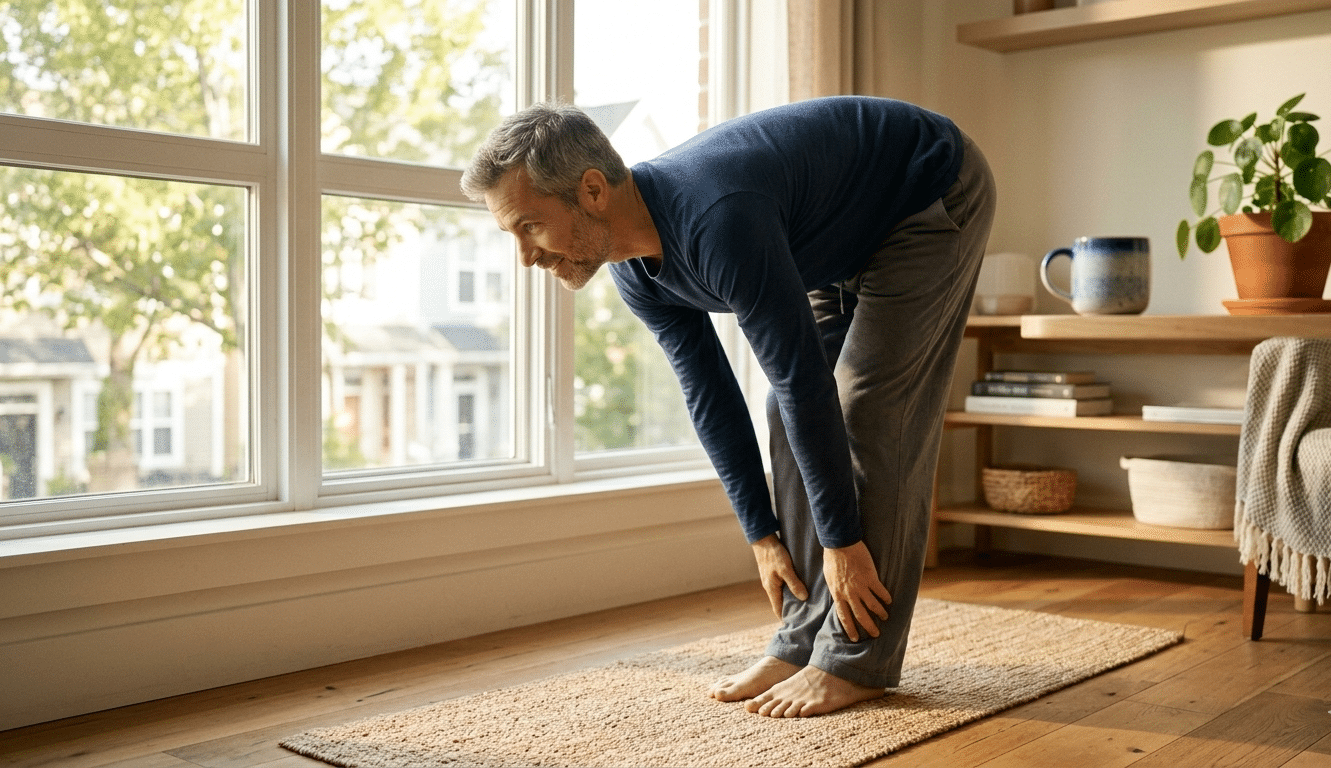
2. Seated Forward Fold (2 minutes)
Sit with legs extended (or bent if tight). Inhale lengthen spine, exhale fold forward from hips – let hands rest on legs or floor. Hold 8-10 breaths.
Benefits: Calms mind, stretches hamstrings/back, signals relaxation.
Modification: Bend knees generously or sit on a folded blanket.
3. Legs Up the Wall Pose (Viparita Karani – 5-8 minutes)
Lie on back, scoot hips close to wall, swing legs up. Arms relaxed at sides or on belly. Close eyes, breathe deeply. Hold as long as comfortable.
Benefits: Reduces fatigue in legs, calms nervous system, improves circulation, promotes deep relaxation for sleep.
Modification: Use pillow under hips or bend knees slightly.
4. Reclined Butterfly Pose (Supta Baddha Konasana – 3-4 minutes)
Lie on back, soles of feet together, knees open to sides. Support knees with pillows if needed. Hands on belly or out to sides. Breathe deeply.
Benefits: Opens hips, releases lower back tension, quiets racing thoughts.
5. Corpse Pose with Guided Breath (Savasana – 5 minutes)
Lie flat on back, arms and legs relaxed, palms up. Scan body from toes to head, releasing tension. Breathe in for 4 counts, out for 6 counts – repeat.
Benefits: Deep relaxation, integrates practice, preps for better sleep.
Tip: Use a blanket over body for comfort; eye pillow optional.
Breathing Techniques to Add Anytime
4-7-8 Breath (Dr. Andrew Weil): Inhale 4, hold 7, exhale 8 through mouth. 4 rounds. Calms anxiety fast.
Box Breathing: Inhale 4, hold 4, exhale 4, hold 4. Great for stress spikes.
Common Mistakes & Fixes
- Forcing poses – go only as far as comfortable
- Holding breath – keep it slow and steady
- Rushing through – stay 5+ breaths per pose
- Doing it right before bed if too stimulating – try earlier evening
Progression & Making It a Habit
- Weeks 1-2: 15 minutes, focus on breath
- Weeks 3+: Add holds or deeper stretches
- Track: Note sleep quality or stress levels after practice
This routine is gentle yet powerful. Do it regularly, and you’ll likely notice easier winding down, less tension, and more restful sleep. It’s a simple gift to yourself in a busy world.
Disclaimer: This is general yoga guidance. Consult a healthcare provider before starting any new physical activity, especially with conditions or injuries.
Sources
- Harvard Health: Yoga for Stress Management and Sleep
- Mayo Clinic: Benefits of Gentle Yoga
- National Sleep Foundation: Relaxation Techniques for Sleep