In today’s fast-paced world, finding time for exercise often feels impossible. Work deadlines, family responsibilities, commuting, and endless notifications leave little room for long gym sessions. But here’s the good news: you don’t need hours or expensive equipment to build real strength. A quick, effective home strength training routine can fit into even the busiest day, taking just 15-20 minutes while delivering lasting benefits like better muscle tone, improved posture, increased energy, and greater daily confidence.
This routine is designed for people with limited time — whether you’re a working parent, a remote worker, or someone juggling multiple roles. It uses mostly bodyweight exercises (with optional light dumbbells or household items like water bottles for added resistance). The focus is on compound movements that work multiple muscle groups at once, making it efficient and practical. No fancy gym needed, no complicated equipment—just consistency and proper form.
Why Strength Training Matters When You’re Busy
Strength training isn’t just about looking good; it’s about feeling capable in everyday life. As we age or spend more time sitting (desk jobs, driving, scrolling), muscle mass naturally declines, posture suffers, and energy levels drop. Regular strength work counters this by:
- Building and preserving muscle to support metabolism and prevent fatigue
- Improving posture by strengthening back, core, and shoulders
- Enhancing joint stability and reducing injury risk during daily activities
- Boosting mood and mental clarity through endorphin release
- Increasing functional strength for tasks like carrying groceries, playing with kids, or climbing stairs
Studies from sources like Mayo Clinic and Harvard Health show that even short resistance sessions (2-3 times per week) can improve strength, bone density, and overall health in adults of all ages. The key is consistency over intensity — short, regular workouts beat occasional long ones every time.
How This Routine Fits Into a Packed Day
The beauty of this program is its flexibility:
- 15-20 minutes total — do it during lunch break, before dinner, or first thing in the morning
- Minimal space — living room, bedroom, or even a small apartment corner
- No equipment required — use bodyweight or grab water bottles/backpack for resistance
- Scalable — beginners start light, advanced add reps or weights
Aim for 3-4 sessions per week, with at least one rest day between. Pair it with a short walk or stretch on off days for balance.
Safety First: Guidelines Before You Begin
While this routine is gentle and beginner-friendly, safety always comes first:
- Consult your doctor before starting if you have joint issues, heart conditions, recent injuries, or haven’t exercised in a while.
- Focus on form over speed or reps — poor form leads to strain.
- Breathe properly: Exhale during the effort (e.g., standing up in squat), inhale during the easier part.
- Start slow — if an exercise feels too hard, modify (e.g., knee push-ups instead of full).
- Listen to your body — mild muscle soreness is normal, sharp pain is not. Stop and rest if needed.
- Warm up 2-3 minutes: March in place, arm circles, gentle torso twists.
The 15-Minute Full-Body Strength Routine
Perform each exercise for 8-12 reps (or time-based holds), 2-3 sets. Rest 30-60 seconds between sets. Total time: 15-20 minutes including warm-up.
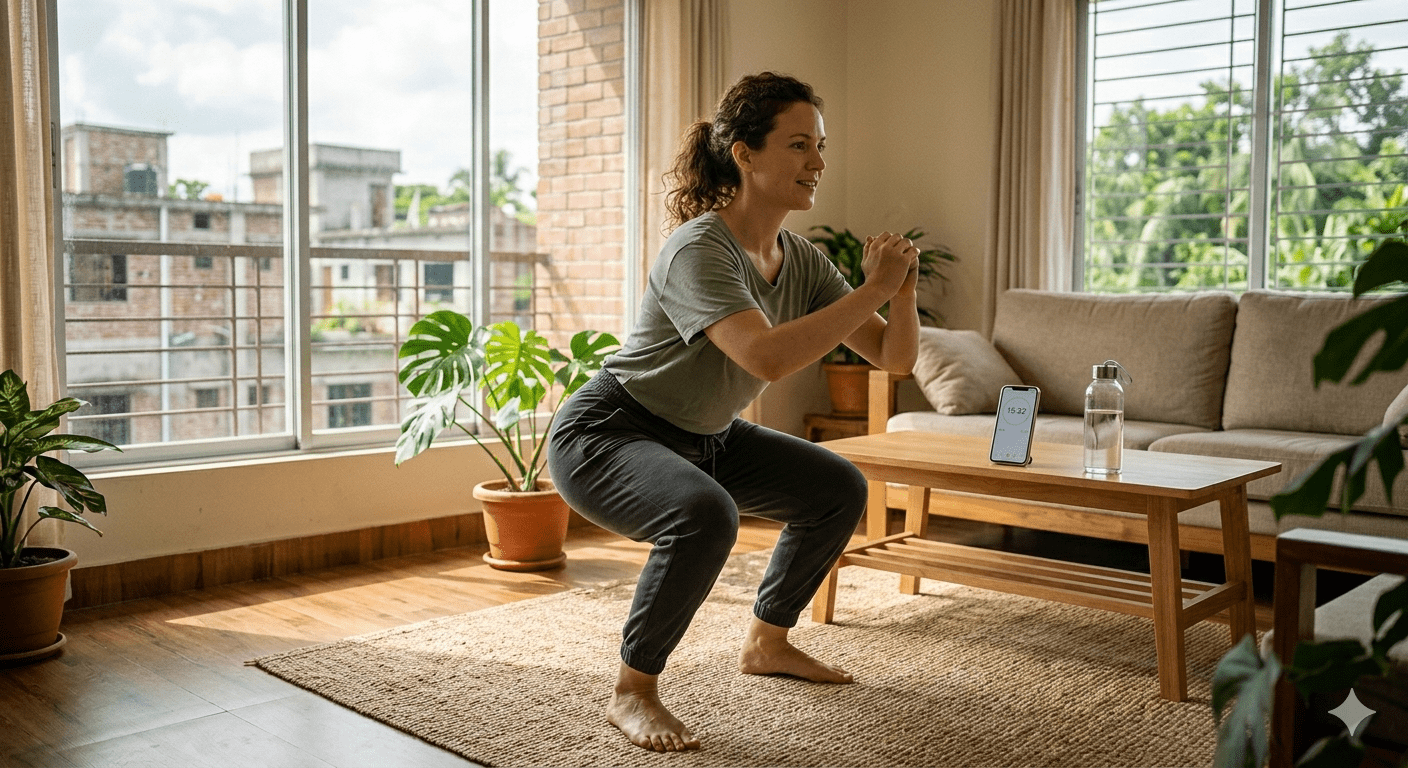
1. Bodyweight Squats (Lower Body Power – Legs & Glutes)
Stand with feet shoulder-width apart, toes slightly out. Engage core, keep chest up. Lower as if sitting back into an invisible chair, thighs parallel to floor or as low as comfortable. Push through heels to stand, squeezing glutes at top. 10-15 reps.
Why it works: Builds leg strength for walking, stairs, standing up from chairs. Targets quads, hamstrings, glutes, and core.
Modification: Hold onto a chair for support or do partial squats if full depth is hard.
Progression: Add dumbbells at chest (goblet squat) or jump at top for power (once form is solid).
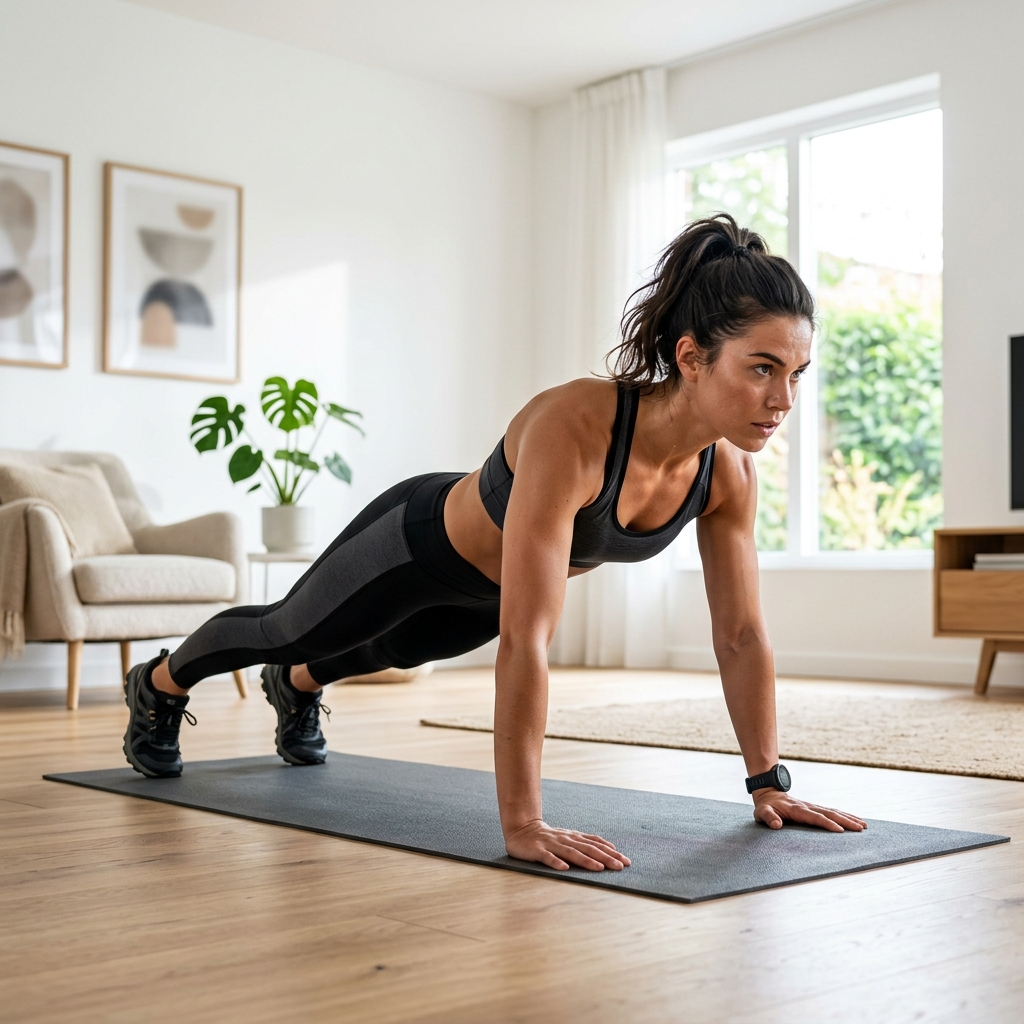
2. Push-Ups (Upper Body Strength – Chest, Shoulders, Triceps)
Start in high plank (hands under shoulders, body straight). Lower chest toward floor by bending elbows, keep core tight. Push back up. 8-12 reps.
Why it works: Strengthens pushing muscles, improves posture, supports daily tasks like pushing doors or getting up from floor.
Modification: Do on knees or against a wall/counter for less intensity.
Progression: Add pause at bottom or elevate feet on a step.
3. Superman Hold & Pulse (Back & Posterior Chain)
Lie face down, arms extended forward. Lift arms, chest, and legs off floor simultaneously, squeezing back muscles. Hold 3-5 seconds, pulse up/down slightly 5-10 times. Lower slowly. Repeat 8-10 times.
Why it works: Strengthens lower back, glutes, and shoulders to counter sitting posture and reduce back pain risk.
Modification: Lift only arms or only legs if full lift is too much.
Progression: Add small dumbbells in hands or increase hold time to 10 seconds.
4. Plank Variations (Core Stability & Full-Body Tension)
Forearms on floor, body in straight line from head to heels. Hold 20-45 seconds (build up). For variety: side plank (20 seconds per side) or plank shoulder taps (alternate tapping shoulders without rocking hips). 2-3 holds.
Why it works: Engages deep core muscles, improves stability, supports spine during daily movements.
Modification: Drop to knees or do forearm plank on elevated surface.
Progression: Add leg lifts or mountain climbers in plank.
5. Glute Bridge with March (Glutes, Hamstrings, Core)
Lie on back, feet flat hip-width, knees bent. Lift hips high, squeeze glutes. At top, lift one foot a few inches (march), alternate legs 8-10 times per side while holding bridge. Lower hips slowly. 2 sets.
Why it works: Targets often-weak glutes and hamstrings, improves hip stability, reduces lower back strain.
Modification: Regular bridge without march.
Progression: Add single-leg bridge or hold dumbbell on hips.
Cool Down & Recovery Tips
Finish with 2 minutes of gentle stretching: child’s pose, cat-cow on floor, or standing forward fold. Drink water, and consider foam rolling if you have tightness.
Recovery advice: Rest days are important — light walk or stretch on off days. Eat protein-rich foods after workouts to support muscle repair (though this isn’t a diet post, protein helps recovery).
Common Mistakes to Avoid
- Rushing reps — slow and controlled is better for strength and safety.
- Arching back in plank or bridge — keep core engaged.
- Ignoring form for more reps — quality over quantity.
- Skipping warm-up — increases injury risk.
How to Track Progress & Stay Motivated
Keep a simple notebook or phone note: reps completed, how you felt, any modifications. Every 2-4 weeks, try increasing reps, hold times, or adding resistance. Celebrate small wins — stronger push-ups, easier daily tasks, better energy. Consistency beats perfection.
This routine is simple, sustainable, and effective. Start today with just one session — your future self will thank you for the extra strength and energy in your busy life.
Disclaimer: This is general exercise information. Consult a healthcare provider before starting any new physical activity, especially with injuries, conditions, or if you’re new to exercise.
Sources
- Mayo Clinic: Strength Training Get Started
- Harvard Health: The Advantages of Strength Training
- National Institute on Aging: Exercise and Physical Activit