There’s a particular kind of paralysis that sets in when you’ve been out of the exercise game for a long time. You know you want to start, you know you should start, but the gap between where you are and where you want to be feels so enormous that it’s easier to just… not. You’ll start Monday. Then next Monday. Then after the holidays.
I’ve been there. Most people have. This post is not going to yell at you or tell you that you just need to want it badly enough. It’s going to give you an honest, practical breakdown of how to actually start — and stay started — when you’re coming from ground zero.
Why Starting Feels So Hard (It’s Not Laziness)
Let’s get this out of the way first: if you’ve been sedentary for a while and you’re struggling to begin, you are not lazy. You’re human, and your brain is wired to avoid discomfort and exertion, especially when the payoff feels distant.
The fitness industry doesn’t help. Everywhere you look, there are shredded people doing impossible things, advice about hitting the gym five days a week, before-and-after pictures that make transformation look easy and fast. It’s not realistic, and it creates an all-or-nothing mentality that sets most people up to fail before they start.
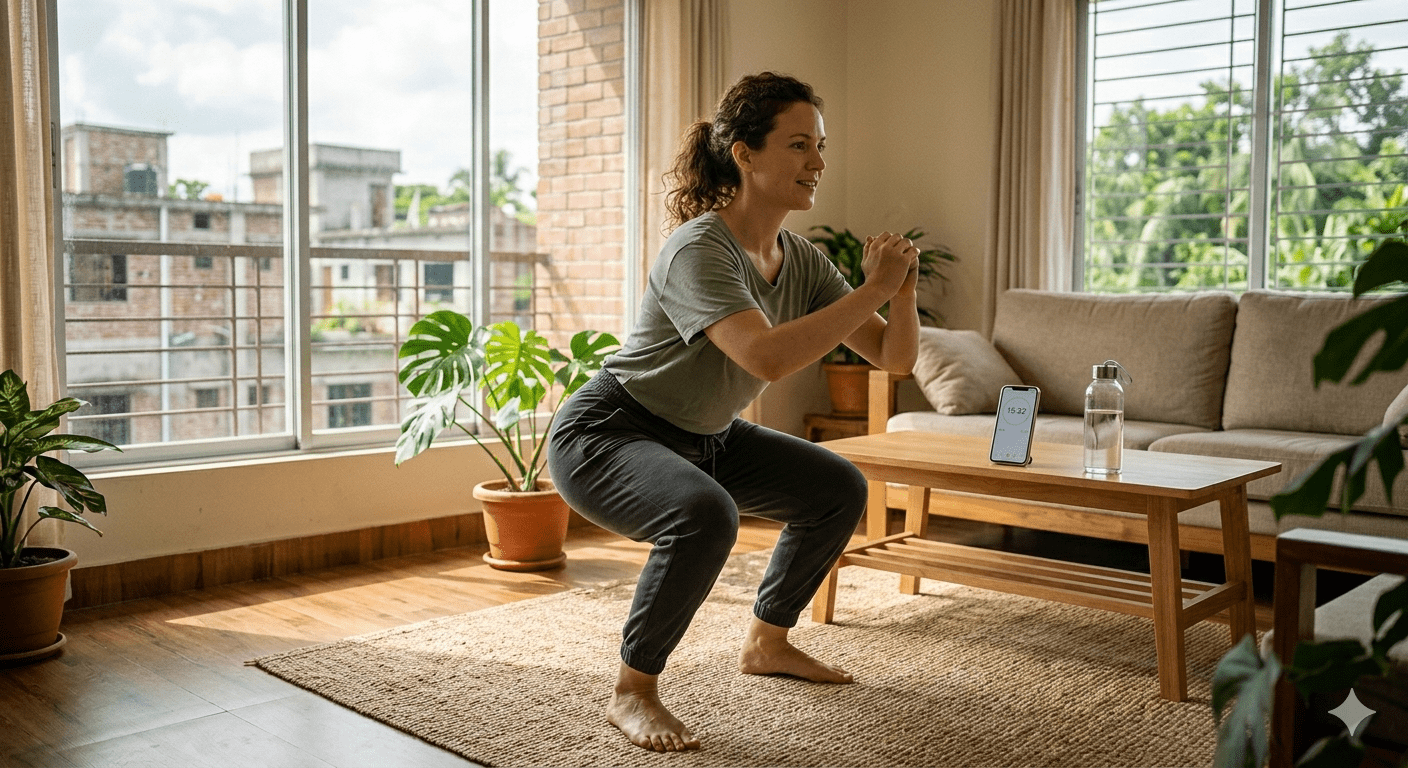
The truth is, any movement is better than none. A fifteen-minute walk is better than sitting. Two minutes of bodyweight squats is better than zero. The goal at the beginning is simply to build the habit, not to build a physique. Once the habit is there, everything else follows.
Week 1 and 2: Just Move, No Goals Yet
In the first two weeks, your only job is to move your body for twenty to thirty minutes, three days a week. That’s it. No tracking calories, no specific workouts, no performance targets. Just move.
Walk your neighborhood. Follow a beginner yoga video on YouTube. Do some stretching in your living room. Swim if there’s a pool near you. Dance in your kitchen if that’s what you enjoy. The activity matters less than the consistency. What you’re doing is telling your brain that this is something you do now. That’s the whole goal in weeks one and two.
Resist the urge to push hard or do too much. This is the biggest mistake beginners make. They go all-out on the first week, wake up unable to walk on day three, and give up. Start embarrassingly easy. You can always add more later.
Weeks 3 and 4: Add Some Structure
Once you’ve managed three sessions a week for two weeks, you’re ready to add a little structure. This is where a simple bodyweight routine works beautifully — no gym membership needed, no equipment, just your body and some floor space.
A good beginner session looks something like this:
- 5-minute warm-up walk or light marching in place
- 10 bodyweight squats
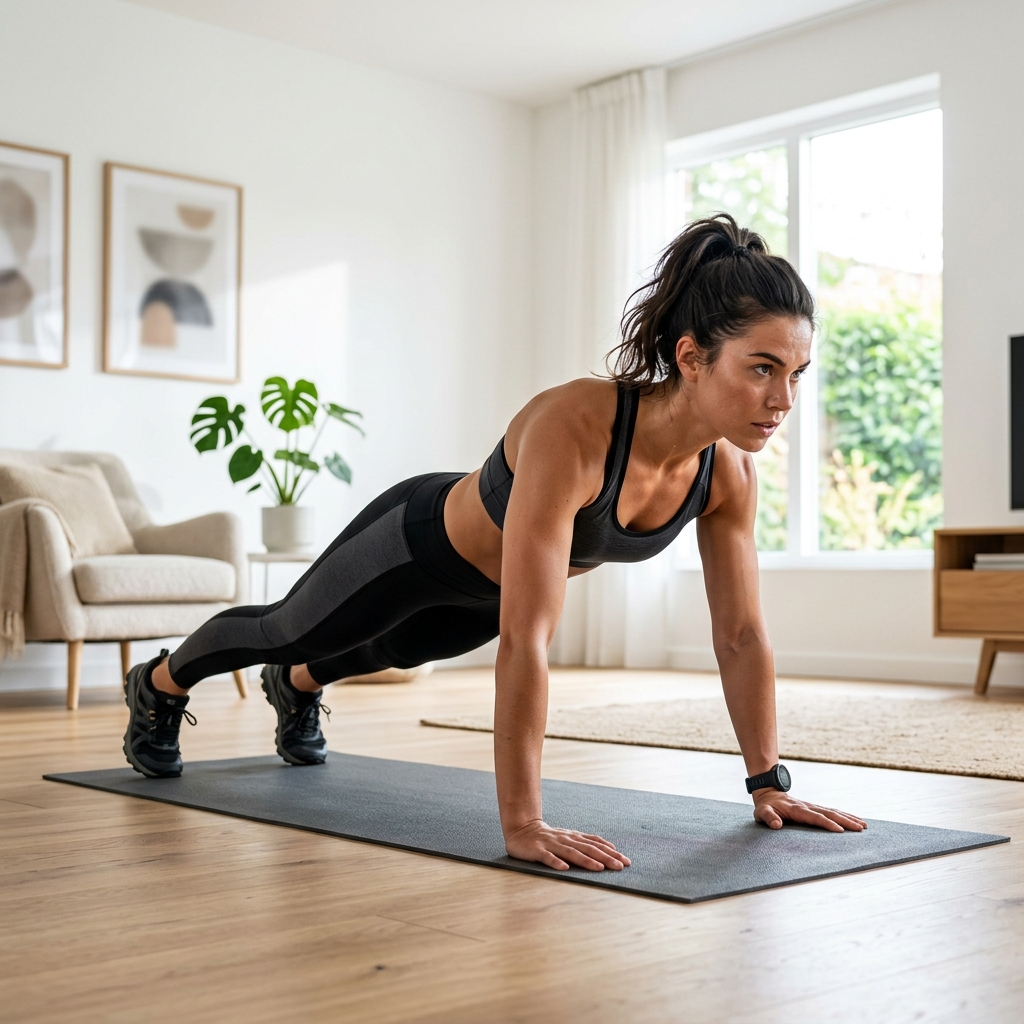
- 8 modified push-ups (from knees if needed)
- 10 glute bridges lying on your back
- 20-second plank hold (or from knees)
- 10 reverse lunges
- 5-minute cool-down stretch
Do this circuit twice with a minute rest between rounds. The whole thing takes about twenty-five minutes. It hits all the major muscle groups, builds functional strength, and won’t destroy you. As you get stronger over the coming weeks, increase the reps or add a third round.
The Single Most Important Thing: Show Up Imperfectly
I cannot stress this enough. There will be weeks where life intervenes, where you miss sessions, where motivation evaporates. This is normal and it happens to everyone — even people who’ve been consistently training for years.
The difference between people who stick with fitness long-term and those who don’t isn’t motivation or genetics or willpower. It’s how they respond when they slip up. People who maintain the habit long-term follow a simple rule: never miss twice.
Miss a session? Fine. Miss two in a row? That’s when habits start to break down. Get back on track with the very next session, even if it’s shorter or less intense than planned. A ten-minute walk still counts. A five-minute stretch still counts. Show up in whatever form you can manage.
Dealing With Soreness
Some muscle soreness in the first few weeks is completely normal and expected. This is called delayed onset muscle soreness — DOMS — and it typically peaks about forty-eight hours after exercise. It’s a sign that your muscles are adapting to new stress, which is a good thing.
To manage it: keep moving lightly on rest days (short walks help enormously), stay hydrated, eat enough protein, and sleep well. Don’t skip your next session because you’re sore — gentle movement actually helps the soreness resolve faster than complete rest.
Sharp, stabbing, or joint pain is a different story entirely. That’s a signal to stop and assess, and potentially see a professional. Soreness in muscles is fine; pain in joints or sharp pain anywhere is not something to push through.
Nutrition: The Basics You Actually Need to Know
You don’t need to follow any specific diet to start seeing results from exercise. At the beginning stage, two things matter most: eating enough protein and not dramatically under-eating.
Protein helps your muscles repair and grow stronger after exercise. Aim for roughly 0.7 to 1 gram of protein per pound of your body weight daily. Eggs, chicken, fish, Greek yogurt, legumes, tofu — all solid sources. You don’t need protein shakes if you’d rather not use them; whole food sources work perfectly well.
Beyond that, eat whole foods where you can, stay hydrated, and don’t slash your calories massively while also trying to start exercising. Your body needs fuel to adapt and recover. Dramatic restriction at this stage tends to backfire — you feel terrible, your performance suffers, and the habit doesn’t stick.
Finding Something You Actually Enjoy
The best exercise is the one you’ll actually do. If you hate running, don’t force yourself to run. If group fitness classes make you anxious, skip them. If you love dancing, dancing is exercise. If you love hiking, hiking is exercise. If you enjoy shooting hoops alone in a park, that counts.
Sustainable fitness is built on activities you at least mildly enjoy, not ones you dread so much you have to drag yourself to them every time. Try different things in the first month or two. You might be surprised by what resonates.
A Final Word
Starting after a long break does not mean starting over from scratch. Your body has muscle memory, it adapts faster than you think, and the progress curve in the early weeks — when everything is new stimulus — is actually some of the steepest and most rewarding you’ll ever experience in fitness.
You don’t have to be perfect. You don’t have to be all-in from day one. You just have to start, stay consistent enough, and give your body time to respond. It will. It always does.