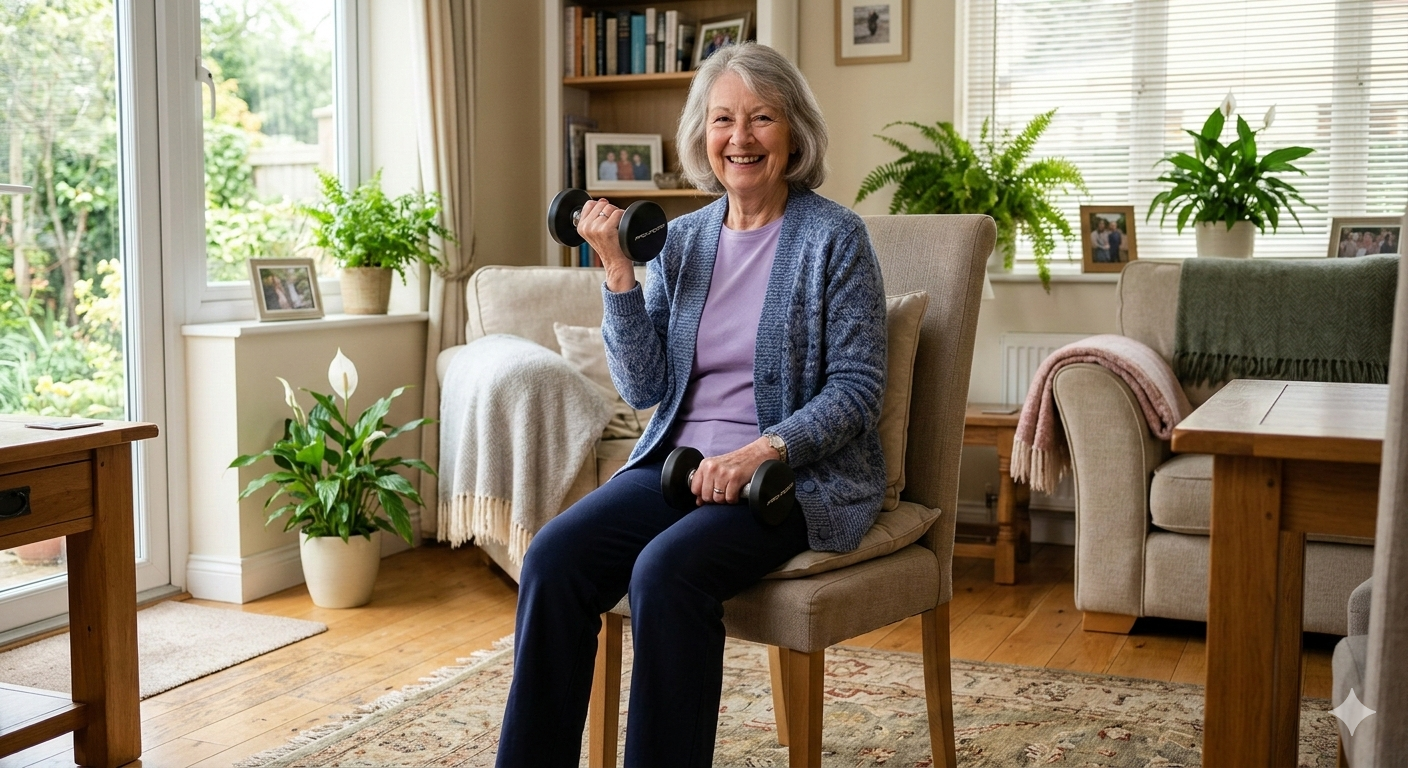
Turning 65 or older doesn’t mean you have to stop building strength. In fact, adding light resistance training is one of the best things you can do to stay independent, reduce fall risk, and keep everyday tasks like carrying groceries or getting up from a chair easier. You don’t need a gym or heavy weights—just a pair of light adjustable dumbbells (start with 3-10 lbs) and a chair at home.
This beginner-friendly routine is designed specifically for seniors over 65 in the USA. It focuses on proper form, safety first, and short sessions (20-30 minutes, 2-3 days per week). Always check with your doctor before starting, especially if you have arthritis, osteoporosis, heart issues, or recent injuries.
Why Dumbbells Work So Well for Seniors
- Build muscle and bone density to fight age-related loss (sarcopenia).
- Improve balance and coordination to prevent falls—major concern after 65.
- Boost energy, mood, and joint support without high-impact moves.
- Doable at home—no travel, no crowds, flexible schedule.
Studies from the National Institute on Aging and Mayo Clinic show that even light resistance training 2-3 times a week can make a big difference in quality of life for older adults.
Safety Rules Before You Start
- Start with the lightest weights you can control (even 2-5 lbs is fine).
- Do 8-12 reps per set, 2 sets per exercise—focus on slow, controlled movements.
- Breathe out during effort, in during relax (never hold your breath).
- Stop immediately if you feel sharp pain (mild muscle fatigue is normal).
- Use a sturdy chair for support; stand near a wall if needed for balance.
- Warm up 5 minutes: March in place or arm circles.
Beginner Full-Body Dumbbell Routine (3 Days/Week)
1. Seated Shoulder Press (Shoulders & Posture)
Sit tall in a chair, hold dumbbells at shoulder height, palms forward. Press weights overhead slowly, then lower. 8-12 reps. Helps with reaching shelves or overhead tasks.
2. Chair-Supported Rows (Back & Posture)
Stand, hinge at hips slightly, one hand on chair for balance. Pull dumbbell to your side like starting a lawnmower, squeeze shoulder blade. Switch sides. Great for countering forward hunch.
3. Goblet Squat Hold (Legs & Core)
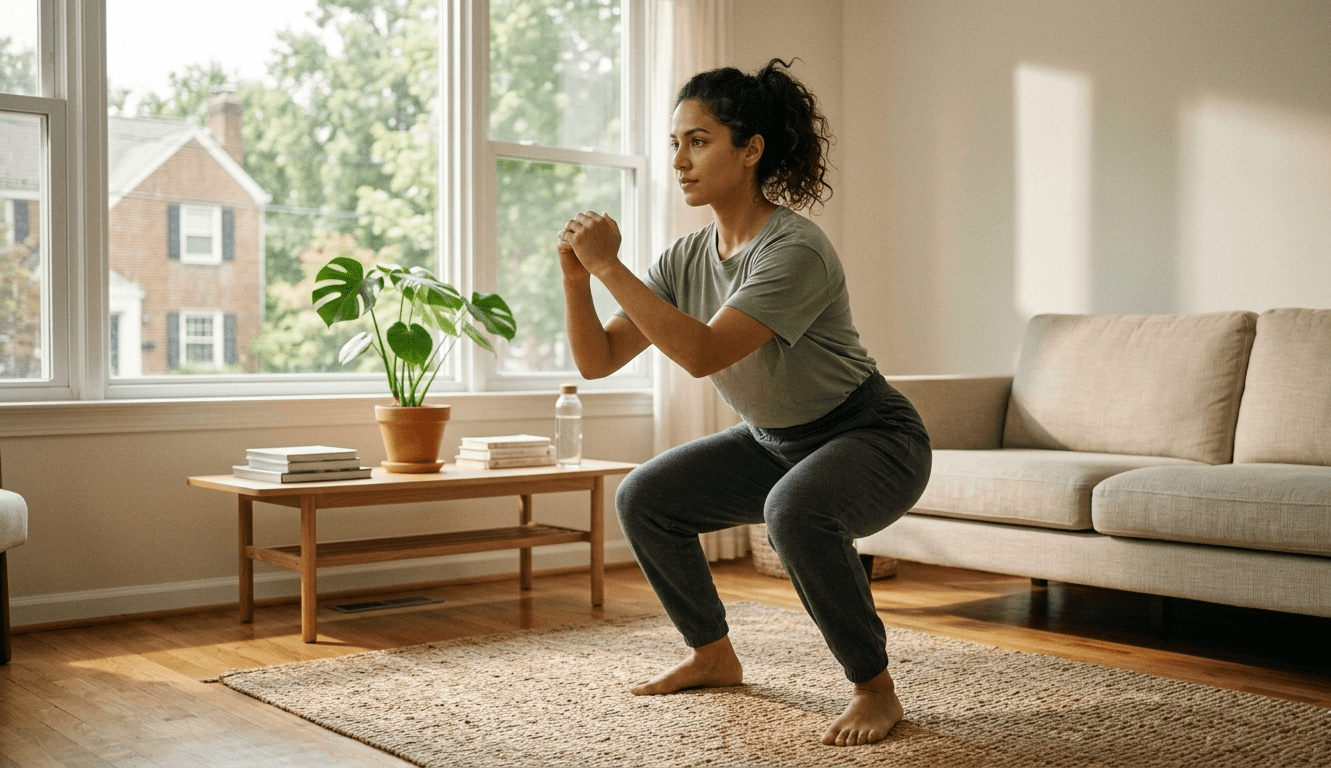
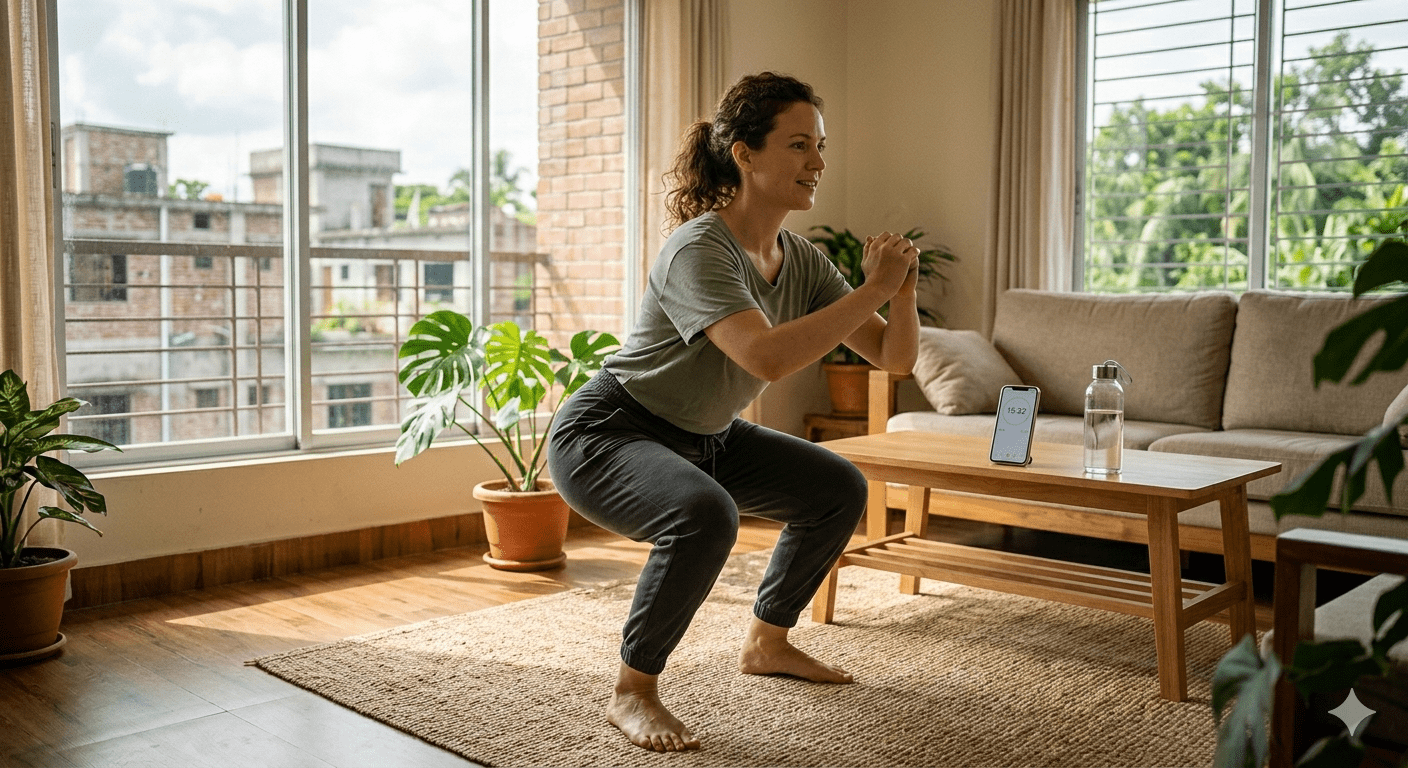
Hold one dumbbell at chest (or use bodyweight first). Feet shoulder-width, lower like sitting back into a chair, then stand. Hold bottom for 2-3 seconds if able. Builds leg strength for stairs.
4. Bicep Curls (Arms for Carrying)
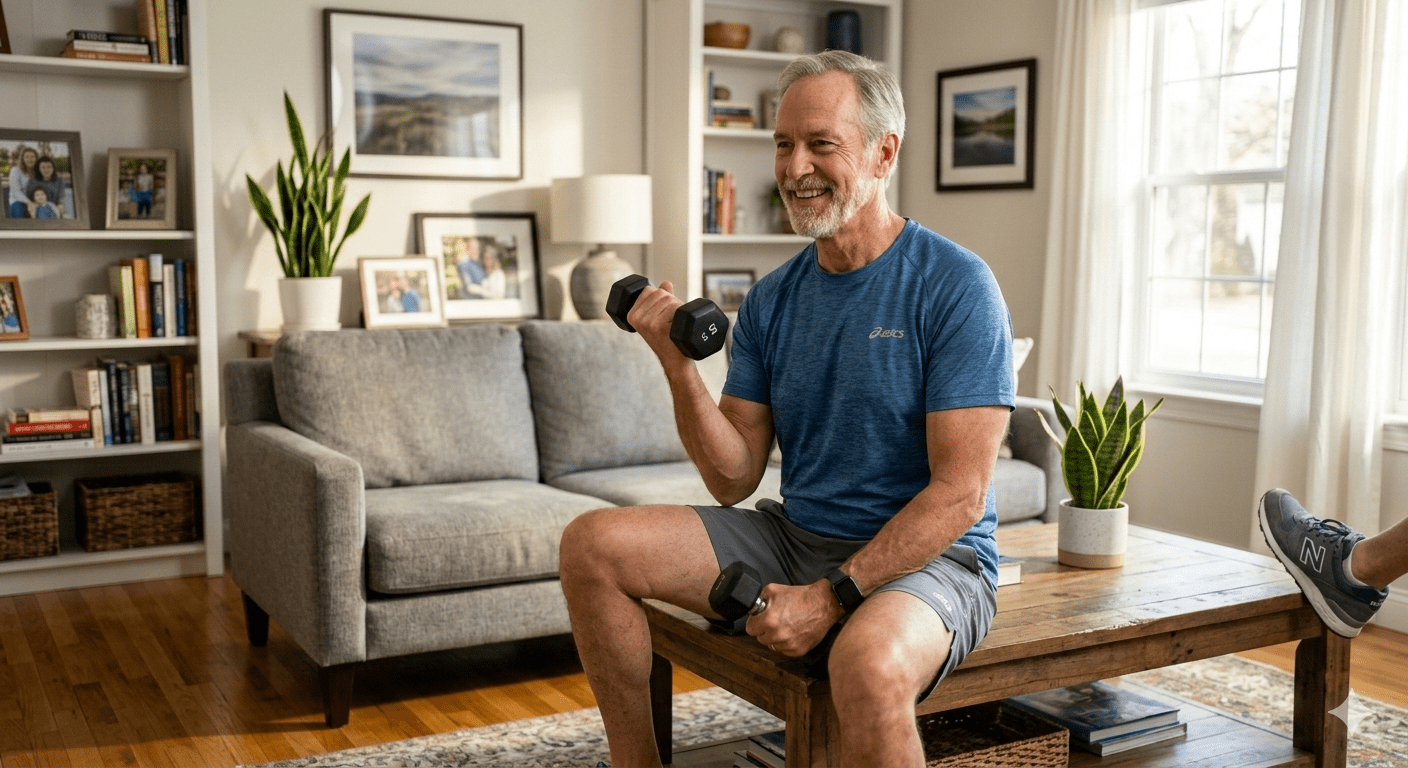
Stand or sit, palms up, curl weights to shoulders slowly, then lower. Keeps arms strong for bags or grandkids.
5. Overhead Tricep Extension (Arms & Stability)
Hold one dumbbell overhead with both hands, lower behind head by bending elbows, then extend up. Seated version is safer.
Progression & Tips for Success
- Weeks 1-2: Focus on form with light weights or no weights.
- Later: Add 1-2 lbs when 12 reps feel easy.
- Rest 1-2 minutes between sets; take full rest days in between.
- Track in a notebook—seeing progress keeps you motivated.
- Combine with walking or balance exercises on off days.
Many seniors in their late 60s and 70s start exactly like this and within months feel stronger, more confident, and less achy. Consistency beats intensity every time.
Disclaimer: This is general exercise guidance, not personalized medical advice. Consult your physician or physical therapist before beginning any new workout program, especially with pre-existing conditions or balance concerns.
Sources
- National Institute on Aging: Exercise and Physical Activity
- Mayo Clinic: Strength Training – Get Stronger, Leaner, Healthier
- Harvard Health: The Importance of Strength Training for Older Adults