Starting a fitness routine doesn’t have to mean expensive gym memberships, complicated equipment, or hours of time. A simple bodyweight workout at home can build real strength, improve mobility, increase energy, and boost confidence in daily life—all with just your body and a small space. This beginner-friendly routine is designed for people with busy schedules who want effective, sustainable results without overwhelm.
The routine focuses on compound movements (exercises that work multiple muscle groups at once) to maximize efficiency. You’ll target legs, core, upper body, back, and mobility in 20-30 minutes, 3-4 days per week. No weights needed — though you can add household items (water bottles, backpack) later for progression.
Why Bodyweight Training Is Perfect for Beginners
Bodyweight exercises use your own weight as resistance, making them accessible, safe, and scalable. Benefits include:
- Builds functional strength for everyday tasks (carrying, lifting, climbing stairs)
- Improves posture, joint stability, and balance
- Boosts metabolism and energy without high impact
- Enhances mobility and reduces stiffness from sitting
- Low injury risk when form is prioritized
Research from Mayo Clinic and Harvard Health shows that consistent bodyweight training improves muscle mass, bone density, mood, and overall fitness in adults, even with short sessions. It’s especially effective for beginners because it teaches proper movement patterns before adding external load.
Getting Started: Setup & Safety
Before jumping in:
- Clear a small space (living room, bedroom corner)
- Wear comfortable clothes and supportive shoes (or barefoot)
- Warm up 3-5 minutes: March in place, arm circles, gentle torso twists
- Focus on form — watch free YouTube tutorials if unsure
- Listen to your body — mild muscle fatigue is normal, sharp pain is not
- Consult a doctor if you have joint issues, injuries, or haven’t exercised recently
The Beginner Bodyweight Routine (20-30 Minutes)
Do each exercise for 8-12 reps (or time-based holds), 2-3 sets. Rest 45-90 seconds between sets. Perform 3-4 days per week with at least one rest day between.
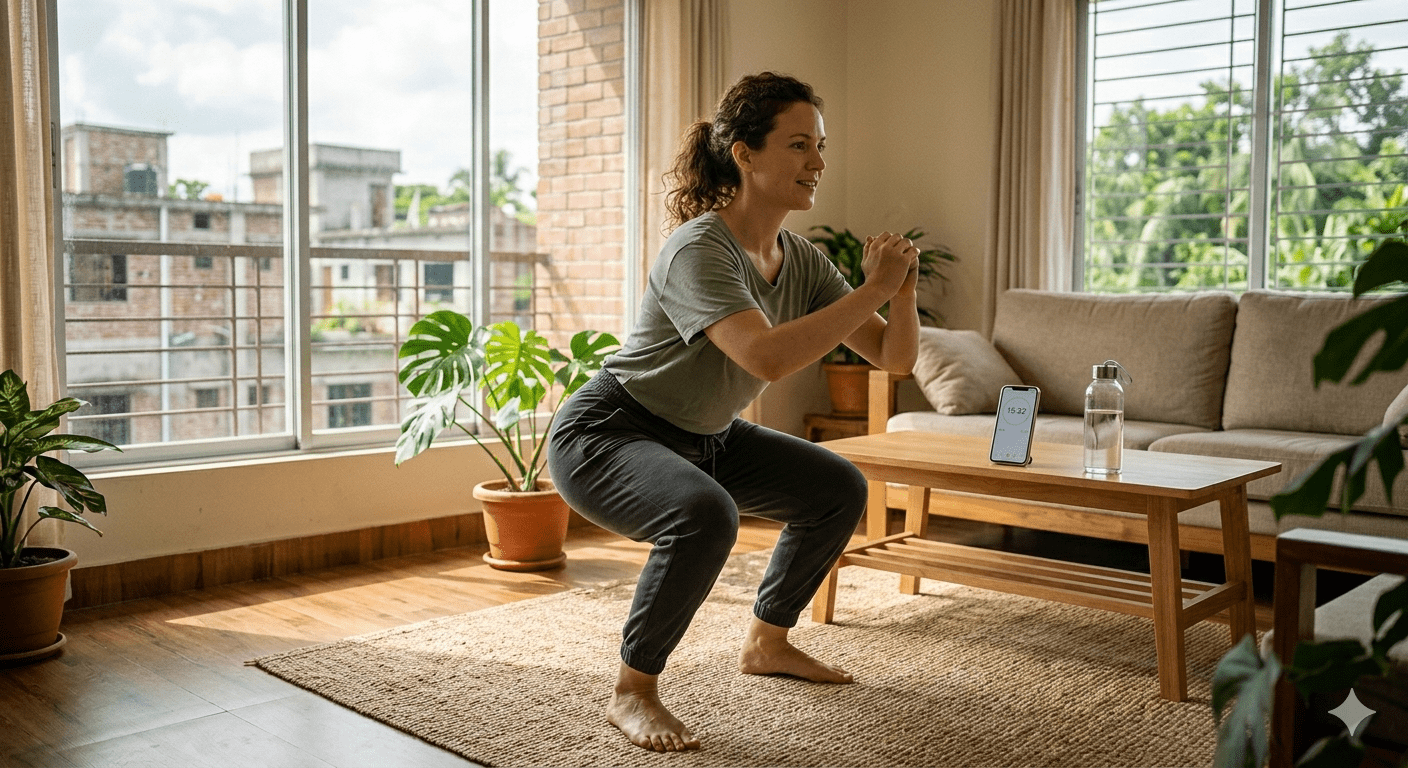
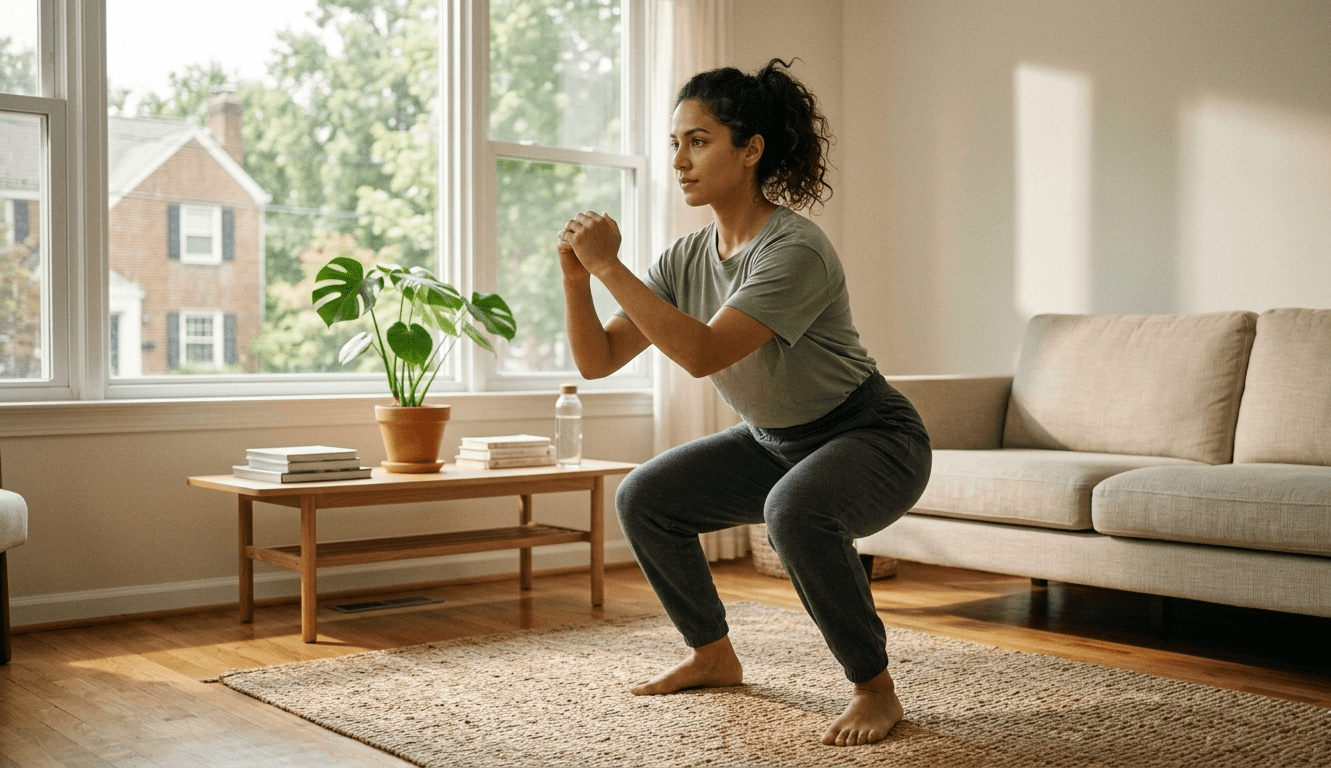
1. Bodyweight Squats (Lower Body & Core – 10-15 reps)
Stand with feet shoulder-width, toes slightly out. Engage core, keep chest up. Lower as if sitting back into a chair, thighs parallel to floor or as low as comfortable. Push through heels to stand, squeeze glutes at top.
Muscles worked: Quads, hamstrings, glutes, core
Modification: Hold onto a chair or do partial range
Progression: Add pause at bottom or jump squat (once strong)
Why include: Builds leg strength for daily movement, improves hip mobility
2. Incline Push-Ups (Upper Body Pushing – 8-12 reps)
Hands on a sturdy surface (counter, wall, or chair). Body straight from head to heels. Lower chest toward surface, push back up.
Muscles worked: Chest, shoulders, triceps, core
Modification: Higher incline (wall) for easier; lower (floor on knees) for harder
Progression: Move to floor push-ups
Why include: Strengthens pushing muscles, improves posture
3. Glute Bridge (Posterior Chain – 12-15 reps)
Lie on back, feet flat hip-width. Lift hips high, squeeze glutes at top, hold 2 seconds. Lower slowly.
Muscles worked: Glutes, hamstrings, lower back, core
Modification: Single-leg version later for challenge
Progression: Add pause or march legs
Why include: Counters sitting posture, strengthens weak posterior chain
4. Superman Hold & Pulse (Back & Shoulders – 10-12 reps)
Lie face down, arms forward. Lift arms, chest, legs off floor, squeeze back. Hold 3-5 seconds, pulse up/down slightly. Lower slowly.
Muscles worked: Lower/upper back, glutes, shoulders
Modification: Lift only arms or legs
Progression: Add arm pull-backs
Why include: Strengthens back for better posture
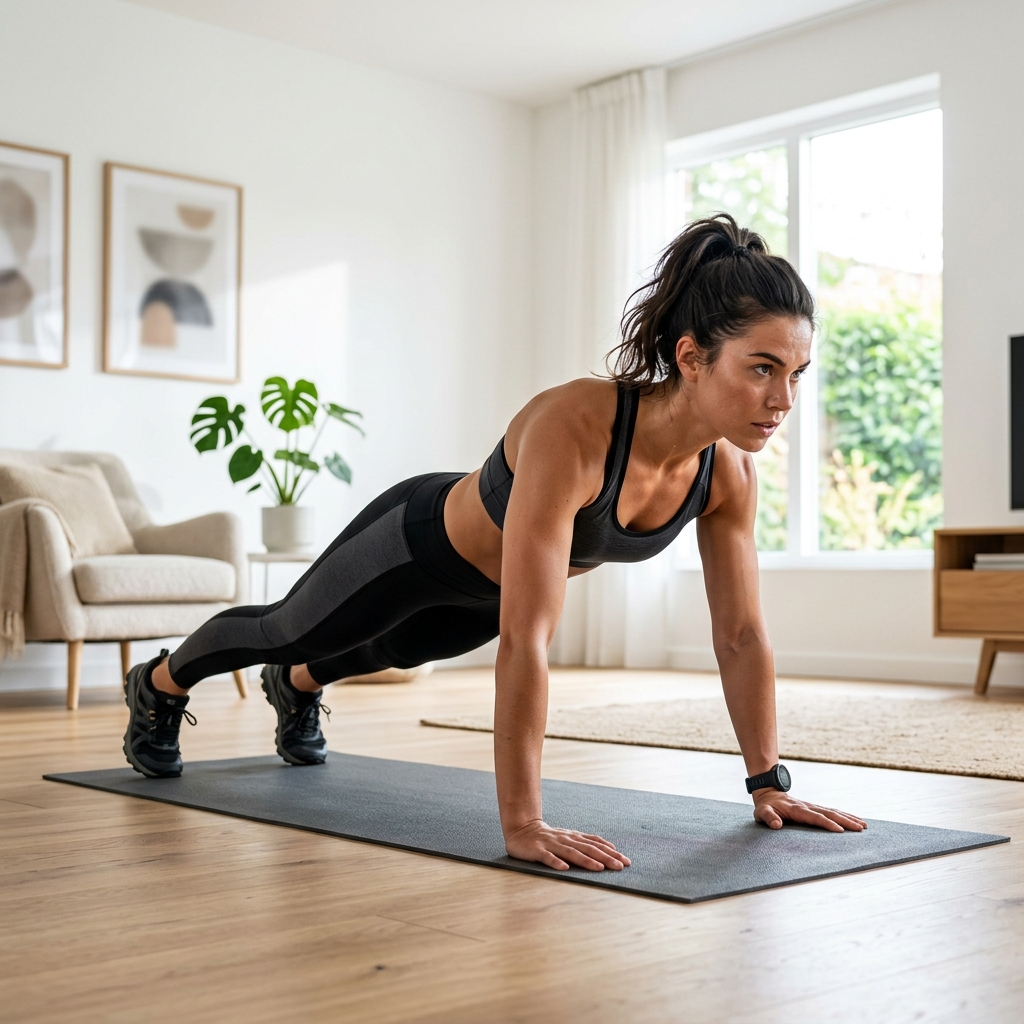
5. Plank (Core Stability – Hold 20-45 seconds)
Forearms on floor, body straight. Engage core, hold without sagging.
Muscles worked: Entire core, shoulders, glutes
Modification: Knees down or elevated forearms
Progression: Add shoulder taps or side plank
Why include: Builds deep core strength for stability
6. Bird Dog (Balance & Core – 8-10 reps per side)
On all fours, extend right arm forward and left leg back. Hold 2-3 seconds, keep hips level. Switch sides.
Muscles worked: Core, back, glutes, shoulders
Modification: Just arm or leg extension
Progression: Add knee-to-elbow crunch
Why include: Improves balance, coordination, and spinal stability
Cool Down & Mobility Finish (3-5 Minutes)
Child’s pose, cat-cow stretches, standing forward fold, gentle neck rolls. Hold each 20-30 seconds.
Progression & Tracking
- Weeks 1-2: Focus on form, 2 sets
- Weeks 3-4: Add reps or sets
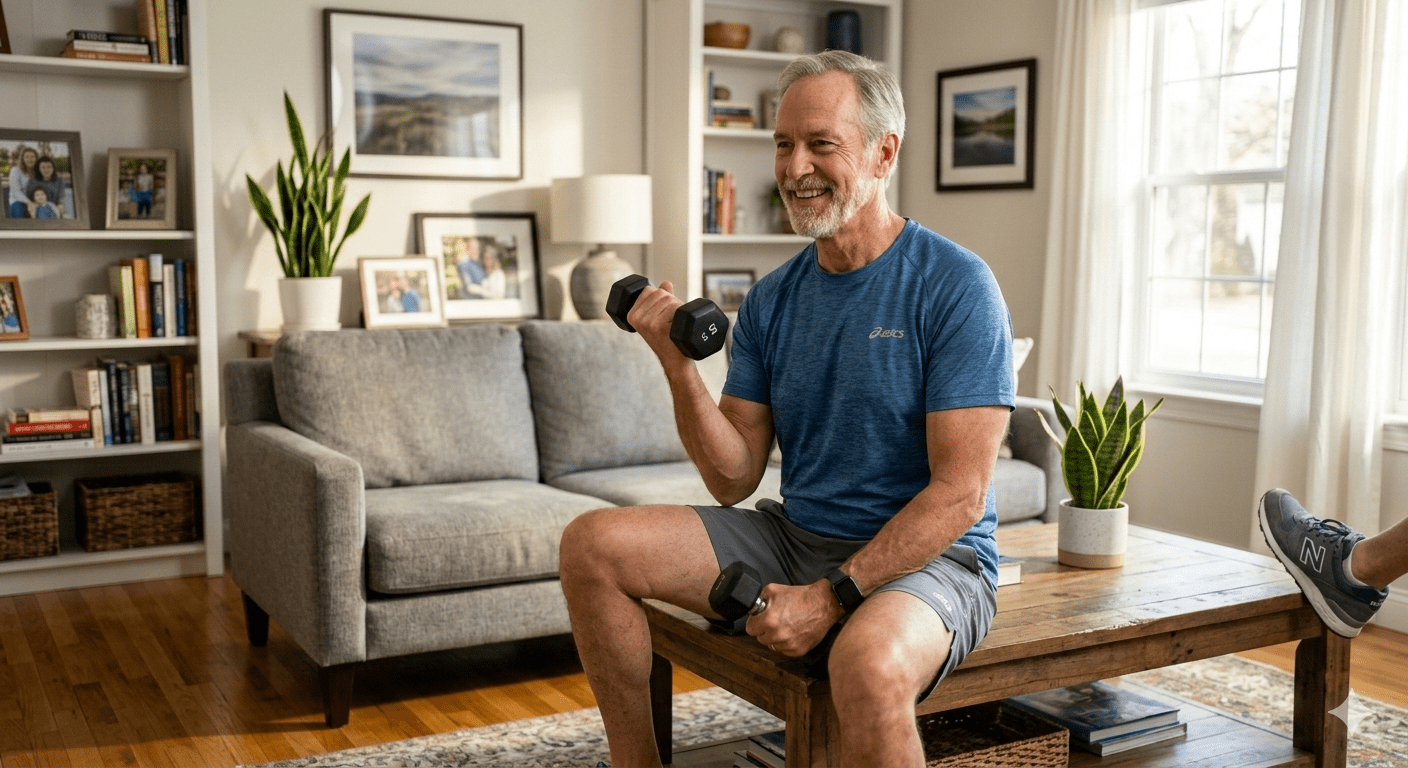
- After 4 weeks: Add household weights or harder variations
Track in a note: reps completed, how you felt. Celebrate improvements like easier daily tasks or better posture.
Common Mistakes & Fixes
- Arching back in plank — engage core
- Rushing reps — slow & controlled
- Skipping warm-up — increases injury risk
- Doing too much too soon — build gradually
This bodyweight routine is simple, effective, and adaptable. Do it consistently, prioritize form, and you’ll notice stronger muscles, better mobility, and more energy in weeks. It’s a foundation you can build on forever.
Disclaimer: This is general exercise information. Consult a healthcare provider before starting any new physical activity, especially with injuries or conditions.
Sources
- Mayo Clinic: Bodyweight Exercises for Strength
- Harvard Health: Benefits of Resistance Training
- National Institute on Aging: Exercise for Adults